
01
Test
Measure the indoor conditions without padding the visit with unrelated services.
Loading
Preparing the page.
Residential Fresh-Air Ventilation | Greater Boston
Your home may be holding onto more than heating and cooling.
Modern construction, spray foam and weatherization reduce uncontrolled leakage. As a home gets tighter, stale air has fewer ways out and fresh air fewer ways in. We evaluate the air first and, when findings support it, design an ERV, HRV or other fresh-air solution around the home.
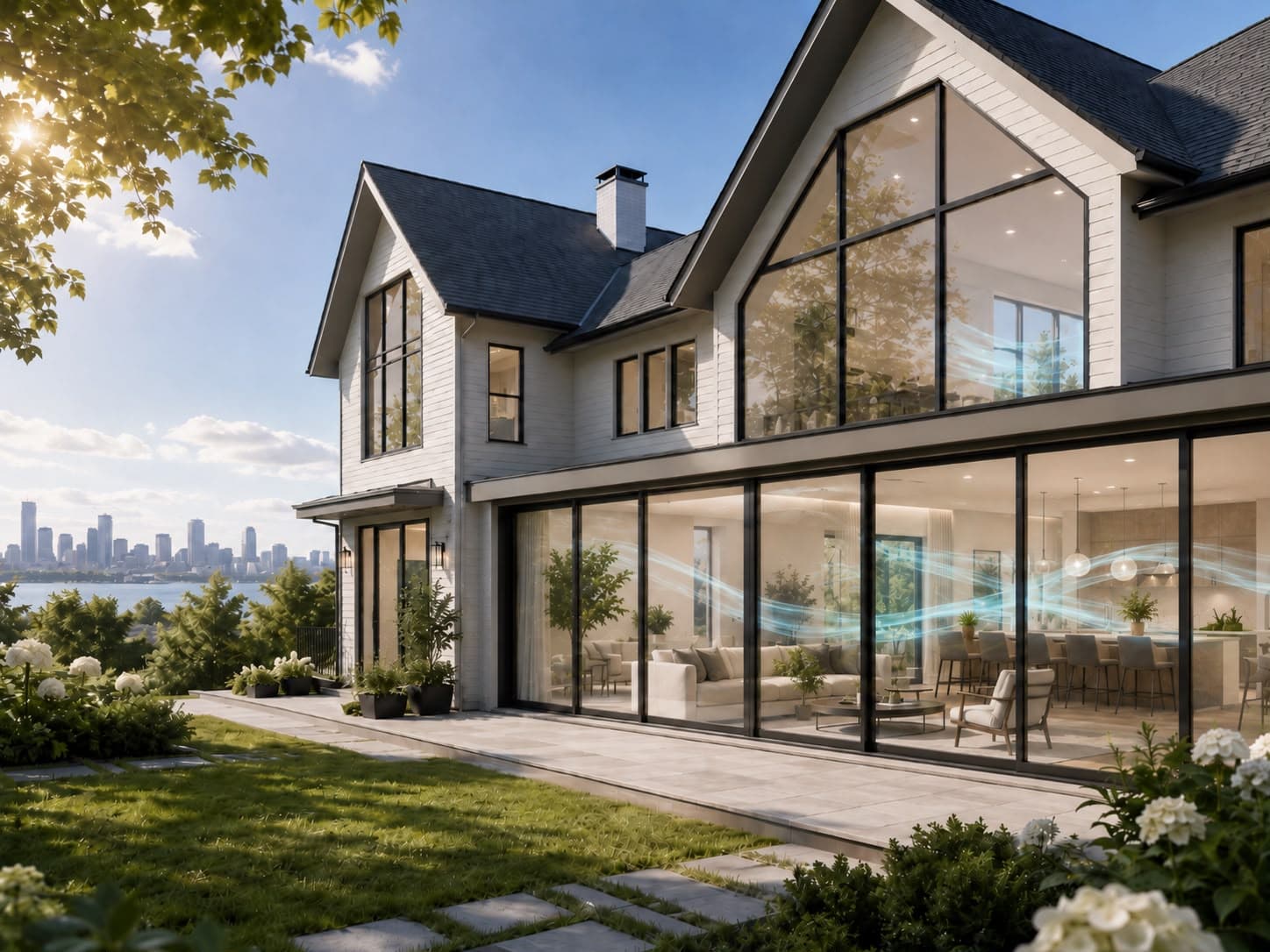
Air Testing and Written Findings
Application-Specific Design
Installation and Commissioning
Technicians Not on Commission
A Tight Home Still Needs Fresh Air
Older homes exchanged air through gaps around windows, doors and the building enclosure. That movement was uncontrolled and inefficient, but it moved air. Spray foam, insulation and extensive air sealing keep heating and cooling inside more effectively, while natural leakage may no longer provide sufficient or predictable ventilation.
The answer is not to make the home leaky again. It is to replace uncontrolled leakage with designed, filtered, balanced ventilation.
Start With the Concern
They start with stale air, stuffy bedrooms, lingering odors, condensation or concerns after weatherization or tight new construction. Those signs do not automatically mean an ERV is needed.
Filtration, ventilation, humidity and contaminant sources affect indoor air differently. The first step is understanding what is actually contributing.
Indoor Air Quality Assessment First
A typical assessment takes about 60–90 minutes. Using a professional multi-sensor instrument, we evaluate airborne particles, carbon dioxide, carbon monoxide, total VOCs, formaldehyde, ozone, nitrogen dioxide, temperature and relative humidity.
01
Measure the indoor conditions without padding the visit with unrelated services.
02
Record the readings and relevant conditions in the home.
03
Provide a written report and explain what the readings may mean.
04
If findings justify further testing or ventilation work, explain why before adding it to the scope.
This is professional screening, not laboratory identification. Mold, radon, asbestos, lead and specific chemical compounds require dedicated testing.
Designed Around the House
We account for layout, required airflow, manufacturer instructions, cold-weather performance, intake and exhaust locations, existing HVAC conditions and future service access.
Connect to existing ductwork when the system and airflow requirements support it.
Use independent supply and exhaust routes when they fit the home better.
Use a room-specific approach where that makes more sense.
Panasonic, AprilAire and Pioneer products are selected for the application—not by brand alone. You receive one clear recommendation, not a list of packages.
Why 617 HVAC
We do not start with an ERV, air cleaner or other product. We start with the condition inside the home and what the assessment shows.
Technicians are not paid sales commission. You receive a written report first and a written project proposal before approved work begins.
Measure
Document indoor-air readings.
Explain
Explain the findings and their limits.
Recommend
Recommend what fits without services the findings do not justify.
What an ERV Does
An energy recovery ventilator runs two controlled air streams. One brings outdoor air in and the other removes stale indoor air. They pass through a recovery core without directly mixing, transferring some heat and moisture and reducing the heating, cooling and humidity impact of ventilation.
01
Outdoor air enters through a designed and protected intake.
02
Filtered outdoor air is delivered to the home.
03
Stale indoor air is collected for removal.
04
Stale air leaves through a separate exterior termination.
Complete Transparency
Installation, Testing and Handoff
Depending on design, installation may include exterior penetrations, termination hoods, new or modified ductwork, equipment mounting, electrical service, controls, condensate management, insulation, sealing and finish restoration. We obtain permits and coordinate inspections when required.
01
Complete the application-specific airflow and installation design.
02
Install the equipment, air paths, controls and supporting components.
03
Commission to manufacturer requirements. When connected to existing ductwork, recheck airflow and static pressure.
04
Provide instructions, warranty information, manufacturer registration, project photos and a system walkthrough.
617 provides a one-year labor warranty. Equipment carries the manufacturer's warranty.
Stale air, stuffy bedrooms, lingering odors, spray foam, extensive air sealing or tight new construction are reasons to evaluate ventilation. An assessment determines whether an ERV, HRV or something else fits.
Massachusetts Stretch and Specialized Codes generally require balanced heat- or energy-recovery ventilation for new residential construction, commonly an HRV or ERV. Requirements vary by project, municipality and governing code.
ERVs include filtration, but it varies by product and does not replace primary HVAC filtration. Ventilation may dilute some contaminants, but allergies can involve filtration, humidity, pollen and other sources. We do not promise medical outcomes.
It transfers some moisture and moderates the ventilation-related humidity load, but does not replace active humidification or dehumidification.
Swipe to explore
Start with the air, not the equipment. We test indoor conditions, document the findings and explain whether ventilation, filtration, humidity control or further investigation makes sense.
© 2026 617 HVAC. All rights reserved.
HRV
Exchanges indoor and outdoor air, transfers heat between streams and tempers incoming outdoor air.
ERV
Exchanges air, transfers heat and some moisture, and moderates ventilation-related humidity.
Application Matters
The approved design, equipment performance, moisture conditions and building operation determine the right choice.
Both recover heat. An ERV also transfers some moisture. On many new-construction projects, 617 installs balanced heat-recovery ventilation as part of the approved design. An HRV may satisfy that design, while many homeowners choose an ERV for moisture transfer. Neither is automatically right for every home, and neither fully heats, cools, humidifies or dehumidifies the home.
Makeup Air Has a Different Job
An ERV provides ongoing ventilation. Makeup air replaces air removed by equipment such as a large kitchen range hood or other high-capacity exhaust.
01
High-capacity equipment removes a large volume of air from the home.
02
Without adequate replacement air, a tight home can depressurize and pull air through uncontrolled leakage paths.
03
Depressurization can create concerns around natural-draft combustion equipment.
04
We design makeup-air systems when the exhaust equipment and home call for one.
Makeup air is related to pressure and exhaust replacement, but it is not a substitute for an ERV or HRV.
617 Home Wellness Standard
ERV filters load and require care.
Controls and operating needs change over time.
Outdoor intake and exhaust terminations can become obstructed.
Performance can drift, so we inspect equipment, check filters and controls and recheck operation when appropriate. Inspect. Monitor. Optimize. Protect.
Sometimes, when airflow and manufacturer requirements support it. Other homes need dedicated ductwork or a standalone solution.
It varies by model, but commonly includes filter care, checking exterior terminations and servicing the recovery core according to manufacturer instructions.
Cost depends on home size, capacity, design, ductwork, access, controls, penetrations and finish work. Written pricing is provided after assessment and design.